Sample full report
The Present One
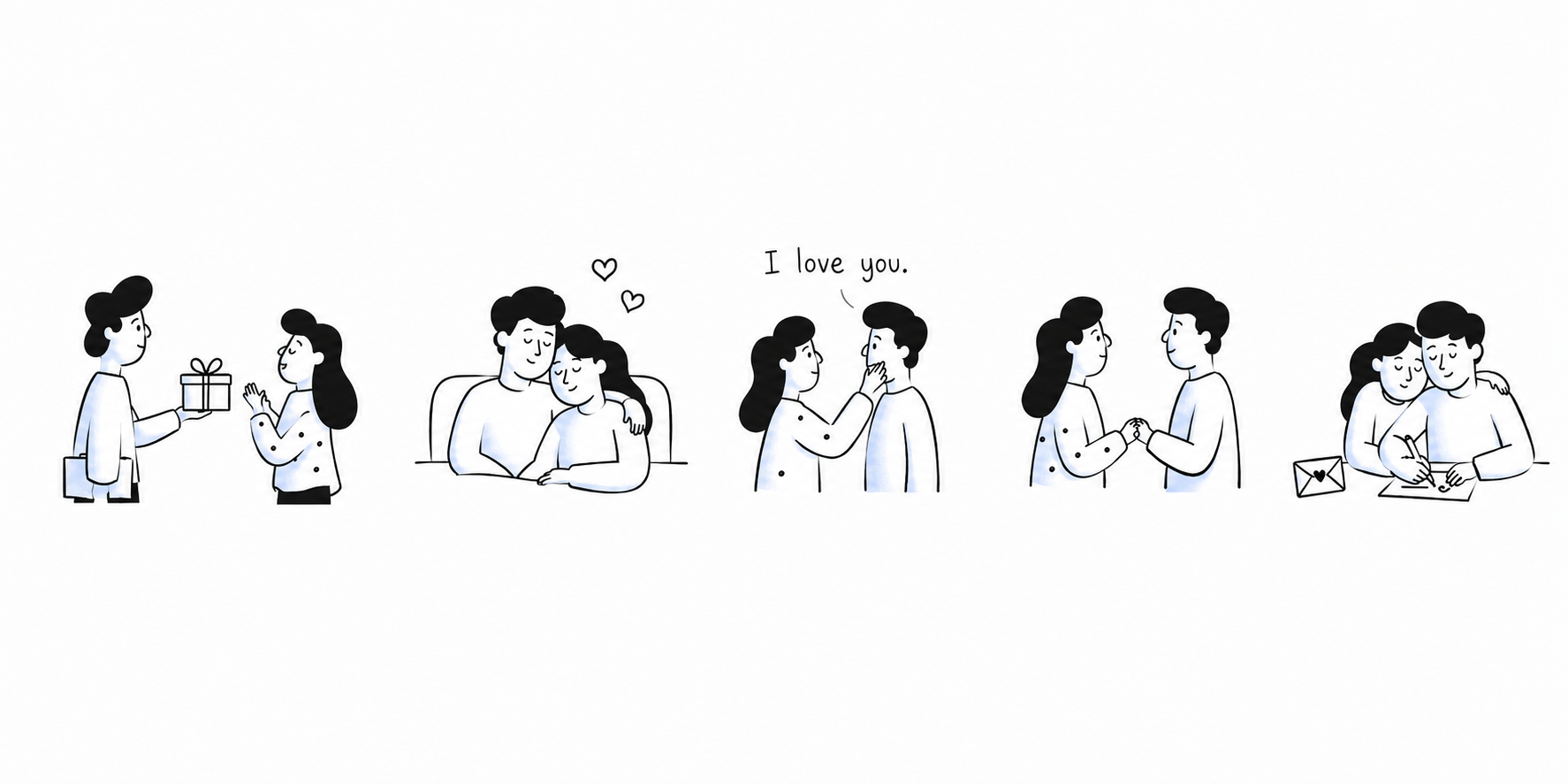
Love language report illustration

Quality Time runs through how you love. Giving and receiving are aligned.

In love-languages terms, focused presence and undivided attention are your strongest signals of love, care, and emotional security. Your top giving and receiving patterns overlap, which makes your care signals easier for close people to read in daily life.

How you receive love

Quality Time
primary
40%
You feel loved through focused attention and meaningful moments together.
Words of Affirmation
secondary
20%
You feel loved through encouragement, reassurance, and heartfelt words.
Acts of Service
secondary
20%
You feel loved when actions make your life easier in tangible ways.
Physical Touch
lower
10%
You feel loved through closeness, warmth, and physical connection.
Receiving Gifts
lower
10%
You feel loved through thoughtful tokens that show care and intention.

How you express love

Quality Time
primary
30%
You feel loved through focused attention and meaningful moments together.
Acts of Service
primary
30%
You feel loved when actions make your life easier in tangible ways.
Physical Touch
secondary
20%
You feel loved through closeness, warmth, and physical connection.
Words of Affirmation
lower
10%
You feel loved through encouragement, reassurance, and heartfelt words.
Receiving Gifts
lower
10%
You feel loved through thoughtful tokens that show care and intention.
Gap insight

Words of Affirmation asymmetry to watch

You receive love through words of affirmation more than you naturally give it. People close to you may not hear enough direct affirmation, even when you are showing up in other ways.

Blind spot

Where your pattern can quietly backfire

Receiving: You mainly feel loved through quality time, but words of affirmation still matters more than you might admit. Your blind spot is dismissing words of affirmation cues as "nice to have" until disconnection builds.

Expressing: You mainly express love through quality time, but you also default to physical touch under stress. Your blind spot is overusing one channel and assuming your intent is obvious when others need a different signal.

  • Protect distraction-free windows
    Schedule short blocks of fully present time and name why they matter so they do not collapse into logistics.
  • Translate service into presence
    If someone does tasks for you, also request a few minutes of undivided attention so both needs are met.
  • Make explicit asks, not hints
    When you need closeness, ask directly for shared time instead of hoping the other person reads subtle cues.
Romantic partner
In close relationships, you likely feel safest when you receive quality time but you often show love through quality time.
Questions to bring to partner
Which moments this week made you feel most loved by me, and which did not land?
When do you feel most present and connected to me?
Friendships
Friendship can drift when your preferred way of receiving care is invisible in day-to-day routines. Protect rituals that match quality time.
Questions to bring to friend
What is one support pattern we should repeat monthly so this friendship stays close?
What kind of time together actually feels meaningful?
Family
Family defaults can hide intent. Ask directly for quality time while translating your quality time signals so care is easier to recognize.
Questions to bring to family
When family stress spikes, what specific response helps you feel understood fastest?
Which routines help us feel close instead of just busy?
Work
At work, when you lead with quality time, adding cues that reflect quality time can improve clarity, trust, and follow-through.
Questions to bring to work
What form of recognition or support helps you stay motivated during high-pressure weeks?
For yourself
When did I last feel genuinely chosen in someone’s time?